
Sugar beet
Summary
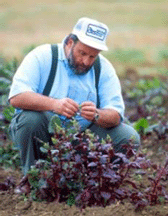 The invention claimed by Biosem in a granted European patent is directed to the transformation of callus of sugar beet by contacting the calli with Agrobacterium having a vector with a gene of interest. The transformation process takes place in a liquid culture medium.
A transgenic sugar beet plant resistant to the sugar beet necrotic yellow vein virus is also part of the disclosed invention. A cDNA or genomic fragment conferring resistance to this virus is specifically limited to a certain nucleotide sequence that encodes at least part of the protein responsible for the resistance.
Monsanto has recently filed applications in Australia, United States and a PCT application related to a method for transforming a sugar beet leaf with Agrobacterium. The transformed leaf is initially derived from a selected region of a sugar beet seedling.
The following table presents basic bibliographic data and a summary of the inventions. Full text of the granted European patent and the PCT application can be accessed as PDF.
| Sugar beet | ||
| Assigned to Biosem | ||
| Issued patents | ||
| Patent No. | Issue date | Summary of the claims |
| EP 517833 B1 | November 2, 1995 | Method for transforming calli of sugar beet by contacting a suspension of them with Agrobacterium having a vector with a gene to be introduced into the plant cells. The gene of interest confers resistance to the infection caused by the sugar beet necrotic yellow vein virus. |
| Remarks: Granted French patent FR 2658987 B1 is not analyzed. | ||
| Assigned to Monsanto | ||
| Applications | ||
| Application No. | Publication date | Summary of the claims |
| WO 01/42480 A2* | June 14, 2001 | A method for preparing transgenic sugar beet cells by selecting part of the cotyledon and hypocotyl region of a sugar beet seedling and micropropagating this part to form a shoot, from which a leaf is selected and put in contact withAgrobacterium cells. The Agrobacterium cells contain a vector with an exogenous gene. Transgenic sugar beet plants capable of expressing the exogenous gene are also recited in the claims. |
| US 2001/42257 A1*
|
November 15, 2001 | The filed claims are worded the same as the claims of the related PCT patent application. |
| Remarks: A related application was also filed in Australia (AU 200125757 A5). | ||
*It is important to remember that applications are not issued patents and the claims as filed have not been approved by any country. Thus, they are non-binding.
Sugar beet – Patent granted to Biosem
Specific Patent Information
| Patent Number | Title, Independent Claims and Summary of Claims | Assignee | ||
|---|---|---|---|---|
EP 517833 B1
|
Title – Regeneration and genetic transformation of sugarbeet
Granted European patent EP 517833 is a national phase entry of WO 1991/13159 (publication in French). Designated contracting States at the time of grant are: Austria, Belgium, Switzerland, Germany, Denmark, Spain, France, United Kingdom, Greece (patent lapsed as reported by INPADOC), Italy, Liechtenstein, Luxembourg, Netherlands, Sweden Method for transforming calli of sugar beet by contacting a suspension of them with Agrobacterium having a vector with a gene to be introduced into the plant cells. The gene of interest confers resistance to the infection caused by the sugar beet necrotic yellow vein virus. |
Biosem |
||
| Remarks | Related patent granted in France (FR 2658987) on 14 April 1995. |
Note: Patent information on this page was last updated on 27 March 2006.
Sugar beet – Patent applications filed by Monsanto
| Patent Number | Title, Independent Claims and Summary of Claims | Assignee | ||
|---|---|---|---|---|
WO 2001/42480 A2
|
Title – Sugarbeet regeneration and transformation
A method for preparing transgenic sugar beet cells by selecting part of the cotyledon and hypocotyl region of a sugar beet seedling and micropropagating this part to form a shoot, from which a leaf is selected and put in contact with Agrobacterium cells. The Agrobacterium cells contain a vector with an exogenous gene. Transgenic sugar beet plants capable of expressing the exogenous gene are also recited in the claims. |
Monsanto | ||
US 2001/42257 A1
|
Title – Sugarbeet regeneration and transformation
According to the USPTO, this application has been abandoned due to failure of the applicant to respond to an office action. There are no continuity data reported as yet. The filed claims are worded the same as the claims of the related PCT patent application. |
|||
| Remarks |
|
Note: Patent information on this page was last updated on 28 March 2006.